|
|
|
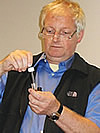
Jeremy
Ross has developed a new system that successfully
integrates three paradigms:
- Western herbal tradition
- Chinese medicine
- Phytopharmacological research
Click here to find out more on Jeremy's new Integrated
System
- Increase clinical effectiveness
- Increase safety
- Treat a wider range of disorders
Jeremy Ross is a leading world authority on Combining
Western Herbs and Chinese Medicine. He has qualifications in botanical sciences, science
teaching, acupuncture, Chinese herbal medicine, and Western phytotherapy.
This website serves the world-wide community of practitioners working
with Combining Western Herbs and Chinese
Medicine. Resources
section helps practitioners keep up to date with advances
in this topic.
|
|
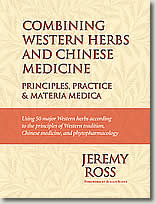
“With
his deep knowledge of Chinese medicine, Western herbal medicine, and Western
sciences, Jeremy Ross is uniquely qualified to interpret
the nature and functions of Western herbs according
to the principles of Chinese medicine.”
—Giovanni Maciocia
See sample chapters of this book
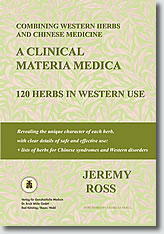
This
new Clinical Materia Medica discusses
120 herbs, each with an illustration, two pages of
text per herb, and a clear Actions and Uses table.
- 700 herb pairs
- List of
herbs for Chinese syndromes
- List of herb pairs for
western disorders
See sample chapters of
this book
|
|
Forthcoming tiles in the Combining
Western Herbs and Chinese Medicine series are:
- A New System for Diagnosis and Treatment:
- 4 Qi Imbalances
+ 5 Elements
- Treating Exhaustion
- Treating Stress and Emotional
Disorders
- Treating Depression
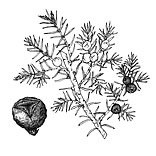 This
useful chart, in the Combining
Western Herbs and Chinese Medicine series,
is designed to be used with Jeremy’s
new book 'A Clinical Materia Medica: 120 Herbs in
Western Use.' This
useful chart, in the Combining
Western Herbs and Chinese Medicine series,
is designed to be used with Jeremy’s
new book 'A Clinical Materia Medica: 120 Herbs in
Western Use.'
|
|
Courses
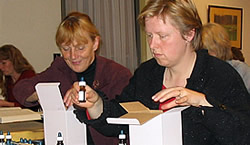
Over the past few years, Jeremy Ross' courses have
earned a well deserved international reputation.
Scroll down the page
and see which would suit your needs. Bookings are available
in a number of countries. For the year's schedule and
venues, please click here for more details.
This course forms the basic training in Combining
Western Herbs and Chinese Medicine. In some countries it is available as a 9-day training.
These 12 workshops each focus on a specific group of Western disorders.
Click on any of the topics below for details:
|
|

 A New Integrated System